
'With inflationary pressures now at elevated levels and the adverse cost environment persisting, the company has to pass on a portion of the increased costs to the market, while continuing to ensure that the impact on customers is kept to the minimum extent possible.'

Commodity markets, especially the metals, are among the most volatile segments of the Indian financial ecosystem. To traders involved in commodity trading, it is not only helpful to keep track of the daily price changes but also necessary to make informed trading decisions. Commodities like gold, silver, copper, and aluminium react to many different factors, which makes it imperative for commodity traders to watch out for metal prices every day.

Tata Motors is set to acquire Italy's Iveco Group, a strategic move aimed at propelling the Indian automaker into the top four global commercial vehicle (CV) manufacturers, with projected annual revenues of $35 billion-$40 billion within five years.

Escalating geopolitical tensions in West Asia are beginning to disrupt India's automotive supply chain, leading to rising commodity prices, logistics bottlenecks, material shortages, and pressure on consumer demand, with two-wheeler makers already raising prices.

Nomura has increased its March 2027 target for the Nifty 50 to 25,900, driven by strong corporate earnings and attractive market valuations, even as risks from the West Asia conflict and high oil prices persist.
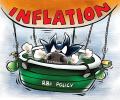
The Reserve Bank of India has increased its retail inflation projection for 2026-27 to 5.1 per cent, up from an earlier estimate of 4.6 per cent. This revision is primarily attributed to mounting input costs, driven by the pass-through of higher global energy prices to domestic petrol and diesel rates, which have seen significant increases since May.

Domestic passenger vehicle dispatches in India rose 25.4 per cent year-on-year to 4,37,312 units in April, continuing the strong demand momentum from the previous fiscal year, according to SIAM.

India's wholesale price inflation surged to 8.30 per cent in April, up from 3.88 per cent in March, primarily driven by a significant increase in the prices of fuel, power, and crude petroleum, according to data from the commerce and industry ministry.

Commodity trading on MCX is quite different from trading equities on the NSE or BSE. During the June-July period, the commodity market players in India will encounter several commodity contract expiries.

The Securities and Exchange Board of India (Sebi) has proposed a new framework to manage strike prices for options contracts, aiming to ensure continuous availability of suitable contracts even during sharp intraday market swings. This move addresses concerns that extreme price movements can leave traders without appropriate options for hedging or positioning.

The Reserve Bank of India (RBI) has projected a 6.9 per cent GDP growth for the current financial year, citing concerns over commodity prices and supply chain disruptions stemming from the West Asia crisis.

Analysts predict that developments in US-Iran negotiations, fluctuations in crude oil prices, and key global economic data will be the primary drivers of gold and silver prices in the coming week, with a strong focus on talks in Switzerland.

Maruti Suzuki India's shares gained over 2.5 per cent after a strong March-quarter performance, with analysts maintaining a positive medium-term outlook driven by buoyant domestic market volumes, capacity expansion, and export growth, despite anticipated near-term margin pressures from higher commodity prices and startup costs.

India's wheat and rice reserves in Food Corporation of India (FCI) godowns have surged to 604.02 lakh tonnes as of April 1, nearly three times the mandatory buffer requirement, according to official data.

Analysts predict that the ongoing US-Iran conflict, fluctuations in crude oil prices, and foreign institutional investor (FII) flows will be the primary factors influencing Dalal Street this week, with inflation concerns adding to investor anxiety.

Hindustan Unilever (HUL) exceeded consensus estimates in Q4FY26, driven by lower overheads and 6 per cent consolidated volume growth. However, the company anticipates further price hikes to counter an expected 8-10 per cent material cost inflation, while maintaining a mid-term margin guidance of 22.5-23.5 per cent.

'OMCs are incurring losses of Rs 1,000 crore per day due to the West Asia crisis.'

Indian benchmark indices Sensex and Nifty experienced declines due to a sharp rally in crude oil prices, continuous foreign fund outflows, and geopolitical uncertainties. Regulatory developments in the banking sector, particularly the implementation of the Expected Credit Loss (ECL) framework, also contributed to the selling pressure.

After the hit of the pandemic, India Inc is now worried about the adverse impact of inflation and higher commodity prices on their revenues and margins. The inflation scare is the strongest among manufacturers of consumer goods such as automobiles, consumer durables, and fast-moving capital goods (FMCG). Companies across sectors fear they will not be able to pass on the hike in input costs to their consumers due to weak demand, which, in turn, would lead to a hit on margins and profitability in the forthcoming quarters.

A peace deal between the US and Iran, set to be signed in Geneva, faces significant hurdles over the release of Iran's USD 12 billion in frozen assets, with conflicting reports from both sides on the conditions for their release.

Insights from behavioural economics suggest that an ambitious nudge can be effective if three conditions are met, points out Ram Singh Insights from behavioural economics suggest that an ambitious nudge can be effective if three conditions are met, points out Ram Singh, director, Delhi School of Economics.

The Indian government has restricted industrial, commercial, and institutional users from purchasing petrol and diesel from retail petrol pumps, directing them to bulk sale points instead. This move, which can last up to 90 days, aims to address abnormal demand growth and prevent localised shortages caused by a significant price difference between retail and bulk fuel prices.

The adverse impact on the margins of auto, consumer staples and consumer durables sectors will be counterbalanced by an earnings uptick in the metals, cement and oil & gas sectors.

The case for long-term investment in gold, however, remains intact.

India's economy registered a robust 7.7 per cent growth in the fiscal year 2025-26, an increase from 7.1 per cent in the previous year, with the January-March quarter alone seeing a 7.8 per cent expansion.
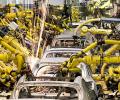
Passenger vehicle sales in India reached a record high of 4.7 million units in FY26, boosted by strong performances from major automakers and the implementation of GST 2.0.

Rising commodity prices are set to hurt margins of India Inc in the on-going fourth quarter of FY 11, even though revenues are seen higher than the previous year, ratings agency Crisil said on Monday.

Suzuki Motorcycle India Ltd (SMIPL) has revised its domestic two-wheeler sales growth estimate for FY27 downwards from 7-8 per cent, citing rising commodity costs due to the ongoing West Asia conflict and its impact on consumer affordability.

Flex fuel motorcycles can deliver "3 per cent higher torque and 7 per cent higher peak power".

The Indian commodity market has experienced significant growth over the past decade, allowing Indian traders to capitalise on price fluctuations in commodities such as gold, crude oil, and natural gas. Earlier, commodity trading required substantial capital as these contracts were only available in bulk quantities. But to make the commodity market more accessible, exchanges such as the Multi-Commodity Exchange (MCX) have launched smaller and more flexible commodities contracts, including mini and micro contracts. These changes in the commodity lot size have changed the way small traders trade in commodity markets.

Net profit of the private sector entities followed a downward trend in third and fourth quarters of 2008-09.

The demerger of Vedanta's four new entities - Vedanta Aluminium Metal, Vedanta Oil & Gas, Vedanta Power, and Vedanta Iron & Steel - has led to a 16% appreciation in aggregated market capitalisation, with Vedanta Aluminium Metal identified as a likely near-term top performer due to its scale, low production costs, and favourable commodities cycle.

Companies are already diversifying sourcing, raising prices, and reworking operating models as the disruption drags on.

Commodities prices will witness a major upheaval in the coming couple of years with demand for food going up.

India significantly increased its crude oil imports from Russia and the United Arab Emirates in June, securing supplies as the Strait of Hormuz began to reopen, with Russian barrels remaining attractive due to discounts and UAE supplies offsetting earlier uncertainties.
The last two days' recovery in commodity prices has done little to ease all-round fears of a global recession following the sharp dip in prices over the past three months. Nor are things likely to improve soon.
S&P Global Ratings has increased India's GDP growth forecast for the next fiscal year to 7.1 per cent, citing private consumption, investment, and exports as key drivers. However, the agency also cautioned that the conflict in the Middle East could strain India's fiscal position due to higher energy prices.

Following through announcements with enforcement of measures is key, as a run through recent Indian economic history shows, points out A K Bhattacharya.

Crude oil prices reached a new record high in futures trade, both domestically and internationally, as escalating military tensions between the US and Iran in West Asia continue to fuel market volatility. Diplomatic efforts concerning the Strait of Hormuz are being closely watched for potential price stabilisation.

Live updates on the US-Israel-Iran war: Trump escalates threats, Iran retaliates, and oil prices surge as the Strait of Hormuz crisis disrupts global markets.
